
What the Transfer Switch Does
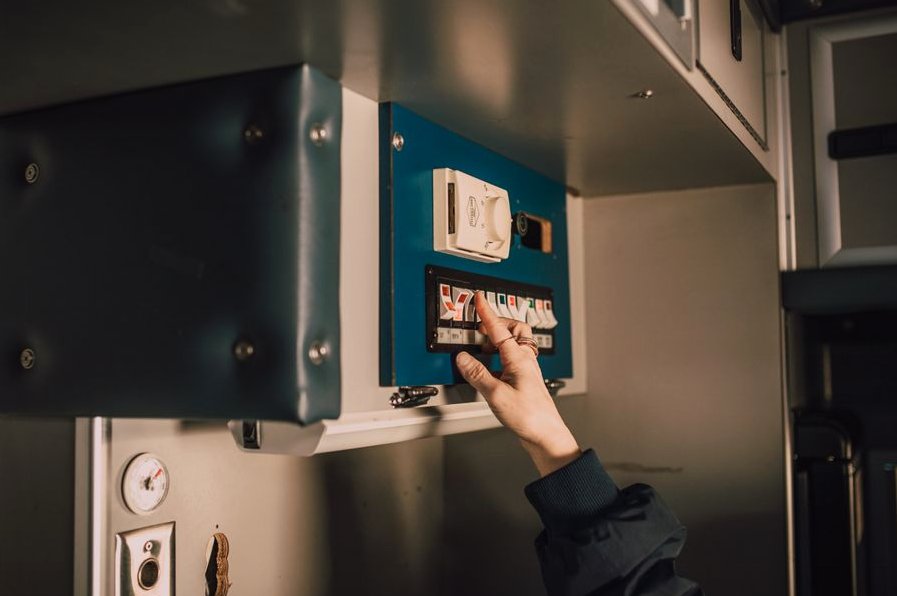
The switch sits between the utility feed and your electrical panel. When utility power drops, it isolates the house from the grid and moves your loads to standby power. The generator is the engine, and the switch decides when the house connects to it.
Before we sign off, we test it the way an outage would. We interrupt utility power and watch for two things: the generator starts, and the transfer switch moves the loads over. If either one doesn't happen cleanly, we keep working until it does.
Smart Load Management
Not every circuit in the house needs to run at once during an outage. A smart load manager is the equipment we use when several big loads would compete for the same generator. It lets us decide what the unit carries instead of sizing everything for worst-case demand. Whether you need one depends on what's on your panel and which circuits you care about most, and we settle that before we quote the job.
Code and Storm Exposure in Panama City
Hurricane Michael brought damaging winds through the Panama City area. It tore roofs up near Tyndall and knocked out power across a large part of the Panhandle for weeks. An outage that long means the generator runs for days at a stretch, so a sloppy switch install or a loose fitting shows up fast.
Bay County is working from the 2023 Eighth Edition of the Florida Building Code. We pull the permit and build the switch, wiring and placement to that edition.
Leak Checks, Oil and Upkeep
We inspect the fuel and oil lines and their connections for leaks and run the scheduled fuel-system leak test. A small weep that means nothing on day one can become a real problem deep into a long outage. We also check the engine oil and oil filter.
Panama City sees only about 1,408 heating degree days a year, so the outages we plan for are mostly storm-driven rather than cold-driven. The engine still needs clean oil whenever the grid goes down.
Transfer Switch Pricing
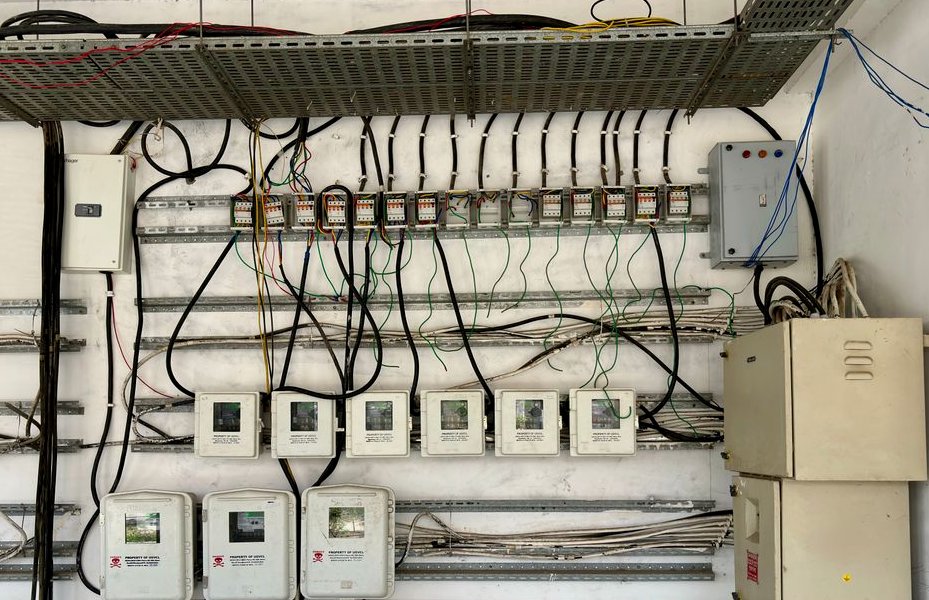
Automatic transfer switch installation runs $1,200 to $1,600 per switch. The generator, the pad and any load management equipment are priced separately, and we put all of it on one written quote after we've looked at your panel.
Inside the Job
A few photos representative of the work.

Our Process
-
Tell Us What's Going On
Tell us what you're seeing and when it started — you'll get a straight answer, not a sales pitch.
-
Free Inspection
We come out, measure what's actually happening, and walk you through what we find.
-
Clear, Written Quote
We put the fix, the timeline, and the number on paper — take your time with it.
Depending on what we find, that can mean:
- Mount the transfer switch upright on a rigid supporting structure and position it close to the loads it serves.
- With utility and generator power turned off, connect the utility supply, generator supply, load conductors, neutral, and ground to their designated transfer-switch terminals.
Typical Panama City Pricing
Ranges to budget around - every situation is priced on its own specifics.
$5000–$6500
$1500–$5000
Straight Answers to Common Questions
It is a complex job that requires professional installation. The process involves mounting a transfer switch close to the loads it serves, connecting utility and generator supplies to designated terminals, wiring start and sensing circuits, and pouring a concrete pad. Finally, technicians must manually test the switch and use meters to verify the generator's voltage and frequency output.
The total cost depends on your power needs and site conditions. A typical 20–24 kW standby generator unit costs between $5,000 and $6,500. Permanent installation labor ranges from $1,500 to $5,000, plus $1,200 to $1,600 for an automatic transfer switch. Additional costs include $50 to $75 per square foot for a concrete pad, $500 to $2,000 for an electrical subpanel, and $50 to $200 for permits.
Generally, a whole house generator is considered a capital home improvement rather than a direct tax deduction. While you cannot write it off on your yearly income taxes, the installation cost can be added to your home's tax basis, potentially reducing capital gains taxes when you sell your property. If medically necessary, it may qualify as a medical expense deduction.
Lowe's and Home Depot do not have flat installation rates; instead, they partner with local, licensed independent contractors who provide custom quotes. Your final price will depend on the generator size, the complexity of your electrical system, the distance to your fuel source, and local permitting fees.
Yes, municipal building departments require permits for installing a standby generator to ensure compliance with electrical, plumbing, and gas safety codes. A typical permit costs between $50 and $200. Professional installers usually handle the permitting process, ensuring the unit passes all local municipal inspections.
The primary disadvantages are the upfront purchase and installation costs, which require professional electrical and gas work. They also require ongoing maintenance, costing about $150 to $300 annually. Additionally, standby generators can be noisy during operation and self-testing cycles, and they must comply with strict local placement and setback regulations.
Our Service Area
We cover Panama City, FL. Call (850) 804-1867 to confirm coverage for your address.
The Facts Behind the Number
Free Inspections
(850) 804-1867Free Inspections, fast scheduling — (850) 804-1867.
Request a Free Inspection