
Flood Zones and Elevation
A substantial part of Panama City sits in a storm-surge or flood zone, so the first thing we check is your parcel's flood designation. We do that before choosing equipment or routing any utilities, because the answer can change both.
For homes in flood zones in Panama City and unincorporated Bay County, the county requires the lowest floor to be above base flood elevation. It also calls for an elevation certificate after slab or framed-floor work. If your generator job involves either, we sort out the paperwork before we pour or set anything.
Pad and Subpanel
The unit sits on a concrete generator pad. Next to the electrical work, we install an electrical subpanel for the circuits you want running during an outage. We settle which circuits go on it with you before we run anything.
Panama City swings from a July average high of 90.9 °F to a January average low of 42.0 °F, a spread of about 49 °F. The unit will run in hot, humid weather, so the load test below matters.
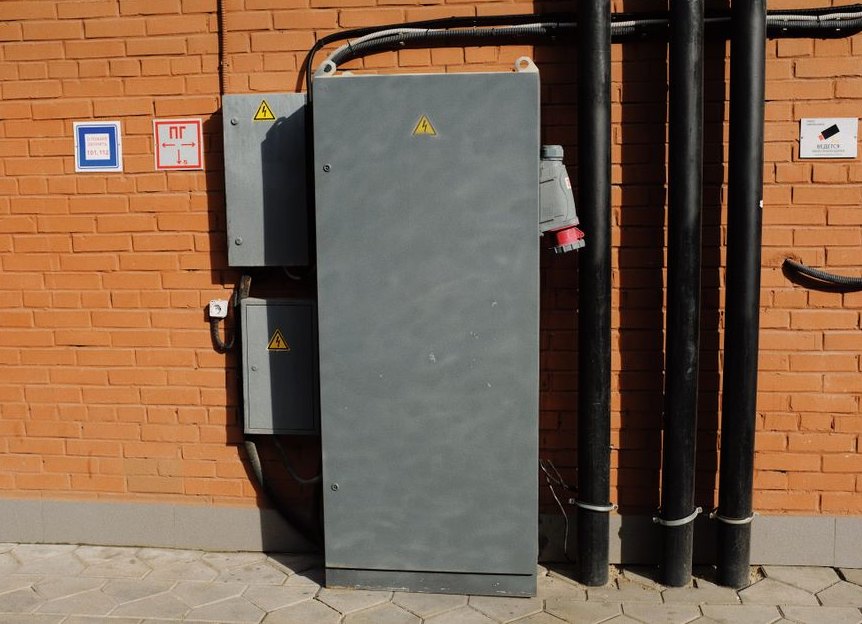
Startup and Load Testing
Once the unit is set and wired, we start the generator in manual mode and let it warm up. Then we put a voltmeter and a frequency meter on the output to confirm it is stable before it feeds the house.
Next we run it under load, staying within its rated capacity. While it carries the house, we check voltage and frequency, gas pressure, unusual noise, vibration and overheating. Anything that is going to rattle loose or run hot should show itself while we are still on site.
What Labor Runs
Labor for a permanent home generator installation typically runs $1500 to $5000. The spread comes from the job itself: the pad, the subpanel work, how far the utilities have to be routed, and whether the parcel's flood designation changes where the equipment goes.
A lot with easy access to the gas and electrical lines sits toward the low end. More wiring or more complicated routing pushes it up. We look at the parcel, confirm what the county requires, and give you a firm price for the work.
Our Process
-
Tell Us What's Going On
Tell us what you're seeing and when it started — you'll get a straight answer, not a sales pitch.
-
Free Inspection
We come out, measure what's actually happening, and walk you through what we find.
-
Clear, Written Quote
We put the fix, the timeline, and the number on paper — take your time with it.
Depending on what we find, that can mean:
- Inspect fuel and oil lines and connections for leaks, and perform the scheduled fuel-system leak test.
- Check the battery condition and state of charge; replace engine oil and the oil filter at the applicable service interval.
Typical Panama City Pricing
Ranges to budget around - every situation is priced on its own specifics.
$150–$300
$5000–$6500
Straight Answers to Common Questions
It is a complex job that requires professional installation. The process involves mounting a transfer switch close to the loads it serves, connecting utility and generator supplies to designated terminals, wiring start and sensing circuits, and pouring a concrete pad. Finally, technicians must manually test the switch and use meters to verify the generator's voltage and frequency output.
The total cost depends on your power needs and site conditions. A typical 20–24 kW standby generator unit costs between $5,000 and $6,500. Permanent installation labor ranges from $1,500 to $5,000, plus $1,200 to $1,600 for an automatic transfer switch. Additional costs include $50 to $75 per square foot for a concrete pad, $500 to $2,000 for an electrical subpanel, and $50 to $200 for permits.
Generally, a whole house generator is considered a capital home improvement rather than a direct tax deduction. While you cannot write it off on your yearly income taxes, the installation cost can be added to your home's tax basis, potentially reducing capital gains taxes when you sell your property. If medically necessary, it may qualify as a medical expense deduction.
Lowe's and Home Depot do not have flat installation rates; instead, they partner with local, licensed independent contractors who provide custom quotes. Your final price will depend on the generator size, the complexity of your electrical system, the distance to your fuel source, and local permitting fees.
Yes, municipal building departments require permits for installing a standby generator to ensure compliance with electrical, plumbing, and gas safety codes. A typical permit costs between $50 and $200. Professional installers usually handle the permitting process, ensuring the unit passes all local municipal inspections.
The primary disadvantages are the upfront purchase and installation costs, which require professional electrical and gas work. They also require ongoing maintenance, costing about $150 to $300 annually. Additionally, standby generators can be noisy during operation and self-testing cycles, and they must comply with strict local placement and setback regulations.
For a 2,000-square-foot home, a 20–24 kW standby generator is a common choice to run major appliances like central air conditioning. The unit itself costs $5,000 to $6,500. Total installation costs will vary based on labor ($1,500 to $5,000), the automatic transfer switch ($1,200 to $1,600), and whether you need a new electrical subpanel.
Our Service Area
We cover Panama City, FL. Call (850) 804-1867 to confirm coverage for your address.
The Facts Behind the Number
Fast Scheduling
(850) 804-1867Free Inspections, fast scheduling — (850) 804-1867.
Book a Free Inspection