
Signs Your Generator Needs Attention
Slow cranking is the usual first sign. Other signs are an engine that starts and then sputters out, or a battery warning on the control panel. A weak battery is the easiest of these to miss, because the unit can look fine until the day it has to carry the house.
If you see any of these, get the unit looked at before you need it. A generator that fails on a dead battery or a fouled plug during an outage leaves you sitting in a hot house.
How We Diagnose a No-Start or Rough Run
We check the battery's condition and state of charge first, since a battery that can't hold charge will mimic a bigger problem. Next we pull and inspect the spark plugs and look at the engine air filter. A fouled plug or a restricted filter can make an engine run rough or die under load.
We work from the simple items toward the harder ones, so you pay to fix what is actually wrong and not for parts swapped on a guess.
Service Work at the Maintenance Interval
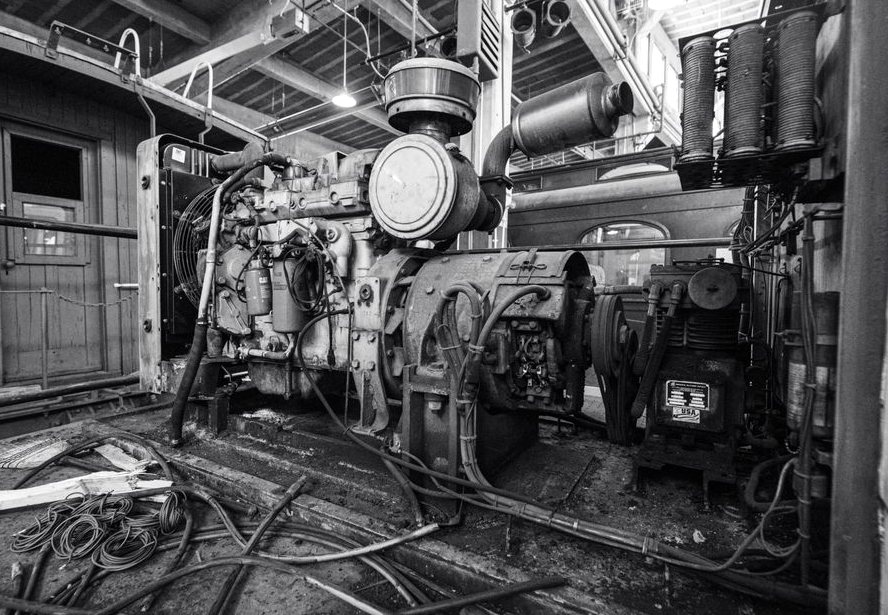
At the applicable service interval we replace the engine oil and the oil filter. We also replace the air filter, inspect and clean the spark plugs, and inspect or adjust valve clearance where the engine calls for it.
Doing this on schedule is cheaper than repairing a unit that was run past its interval, and it is the best protection against a failure during a long outage.
Why Run Time Matters Here
Panama City logs about 2,621 cooling degree days a year (base 65°F). That means air conditioning runs hard for much of the year, and a generator carrying a house through a summer outage can run for hours at a stretch. A unit with fresh oil, a clean filter and good plugs is far better prepared for that than one that has been ignored since installation.
What Repairs and Pads Cost
Repair cost depends on what the diagnosis turns up, so we explain the findings and the price before we start the work.
If the unit needs a new concrete pad, expect $50 to $75 per square foot. Multiply that by the footprint you need and you have a working estimate before we ever visit.
Inside the Job
A few photos representative of the work.
Our Process
-
Tell Us What's Going On
Tell us what you're seeing and when it started — you'll get a straight answer, not a sales pitch.
-
Free Inspection
We come out, measure what's actually happening, and walk you through what we find.
-
Clear, Written Quote
We put the fix, the timeline, and the number on paper — take your time with it.
Depending on what we find, that can mean:
- Start the generator in manual mode, let it warm up, and use a voltmeter and frequency meter to check its output.
- Test generator operation under load without exceeding its rated capacity; check voltage, frequency, gas pressure, unusual noise, vibration, and overheating.
Typical Panama City Pricing
Ranges to budget around - every situation is priced on its own specifics.
$50–$200
$150–$300
Straight Answers to Common Questions
It is a complex job that requires professional installation. The process involves mounting a transfer switch close to the loads it serves, connecting utility and generator supplies to designated terminals, wiring start and sensing circuits, and pouring a concrete pad. Finally, technicians must manually test the switch and use meters to verify the generator's voltage and frequency output.
The total cost depends on your power needs and site conditions. A typical 20–24 kW standby generator unit costs between $5,000 and $6,500. Permanent installation labor ranges from $1,500 to $5,000, plus $1,200 to $1,600 for an automatic transfer switch. Additional costs include $50 to $75 per square foot for a concrete pad, $500 to $2,000 for an electrical subpanel, and $50 to $200 for permits.
Generally, a whole house generator is considered a capital home improvement rather than a direct tax deduction. While you cannot write it off on your yearly income taxes, the installation cost can be added to your home's tax basis, potentially reducing capital gains taxes when you sell your property. If medically necessary, it may qualify as a medical expense deduction.
Lowe's and Home Depot do not have flat installation rates; instead, they partner with local, licensed independent contractors who provide custom quotes. Your final price will depend on the generator size, the complexity of your electrical system, the distance to your fuel source, and local permitting fees.
Yes, municipal building departments require permits for installing a standby generator to ensure compliance with electrical, plumbing, and gas safety codes. A typical permit costs between $50 and $200. Professional installers usually handle the permitting process, ensuring the unit passes all local municipal inspections.
The primary disadvantages are the upfront purchase and installation costs, which require professional electrical and gas work. They also require ongoing maintenance, costing about $150 to $300 annually. Additionally, standby generators can be noisy during operation and self-testing cycles, and they must comply with strict local placement and setback regulations.
Our Service Area
We cover Panama City, FL. Call (850) 804-1867 to confirm coverage for your address.
The Facts Behind the Number
Fast Scheduling
(850) 804-1867Free Inspections, fast scheduling — (850) 804-1867.
Get a Free Inspection