
Warning Signs of a Weak Battery
Slow, labored cranking is the usual first sign. Other signs are rapid clicking when the unit tries to start, a low-battery warning on the control panel, or a case that looks swollen. A battery can start the engine one week and fail the next, so don't wait for a complete no-start.
Here the heat does more damage than the cold. January lows average about 42 °F, but July highs average about 91 °F, and a battery sitting in a hot enclosure all summer ages faster. If your generator is a few years into service and cranking has slowed, replace the battery before storm season.
How We Test Before and After the Swap
We start the generator in manual mode and let it warm up. Then we put a voltmeter and a frequency meter on its output. A reading that is off tells us the problem may be more than the battery, and we would rather find that before we leave than after.
Next we run the generator under load, staying within its rated capacity. During that run we check voltage, frequency, gas pressure, unusual noise, vibration and overheating. A battery that cranks the engine once but sits on a failing charging system will die again, so we want to see the whole unit hold up under load.
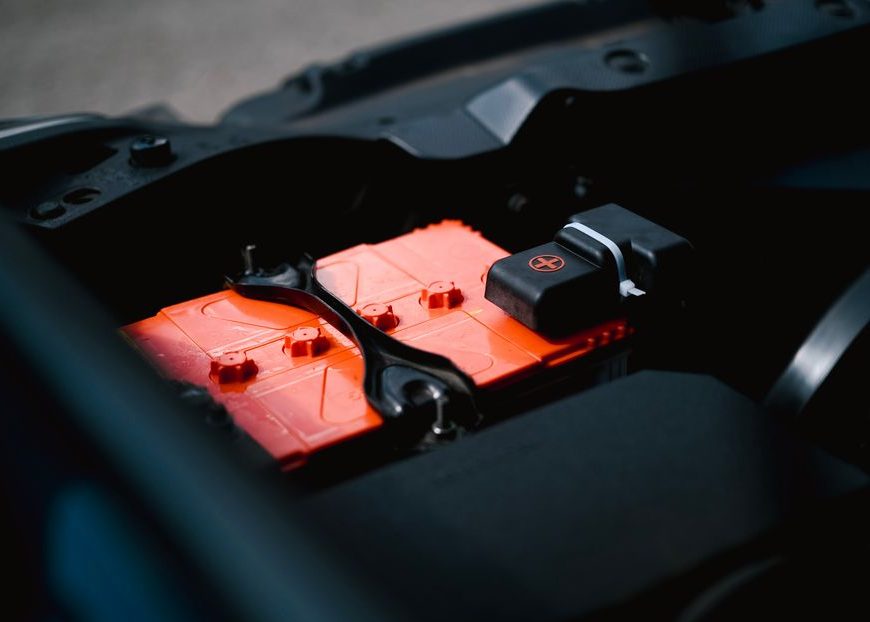
The Replacement
We remove the old battery, clean the terminal connectors of corrosion, and install a new battery suited to a standby generator, which sits on a float charge instead of being cycled like a car battery. Once it is secured and connected, we start the unit manually and run it again under load to confirm it cranks promptly and the system holds steady.
We also check the connection back to the automatic transfer switch, so the generator and the house are both ready to hand over power when the utility drops.
Permits and Cost
A battery swap by itself is routine maintenance. If related electrical work on your standby system calls for a permit, expect fees of $50-$200 per permit. We quote the battery and any permit fees up front, so the number you approve is the number you pay.
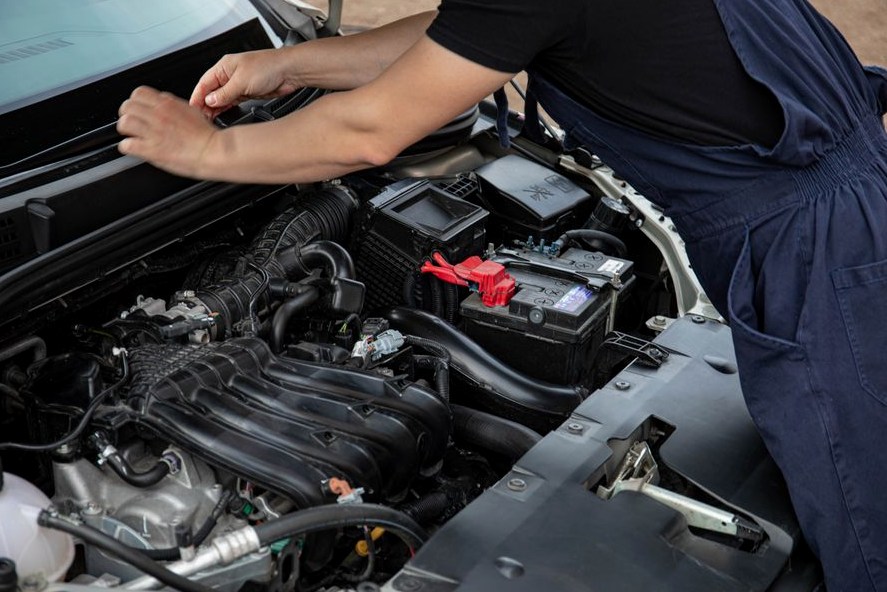
Inside the Job
A few photos representative of the work.
Our Process
-
Tell Us What's Going On
Tell us what you're seeing and when it started — you'll get a straight answer, not a sales pitch.
-
Free Inspection
We come out, measure what's actually happening, and walk you through what we find.
-
Clear, Written Quote
We put the fix, the timeline, and the number on paper — take your time with it.
Depending on what we find, that can mean:
- Test automatic operation by interrupting utility power and verifying that the generator starts and the transfer switch moves loads to standby power.
- Inspect fuel and oil lines and connections for leaks, and perform the scheduled fuel-system leak test.
Typical Panama City Pricing
Ranges to budget around - every situation is priced on its own specifics.
$150–$300
$5000–$6500
Straight Answers to Common Questions
Yes, municipal building departments require permits for installing a standby generator to ensure compliance with electrical, plumbing, and gas safety codes. A typical permit costs between $50 and $200. Professional installers usually handle the permitting process, ensuring the unit passes all local municipal inspections.
The primary disadvantages are the upfront purchase and installation costs, which require professional electrical and gas work. They also require ongoing maintenance, costing about $150 to $300 annually. Additionally, standby generators can be noisy during operation and self-testing cycles, and they must comply with strict local placement and setback regulations.
For a 2,000-square-foot home, a 20–24 kW standby generator is a common choice to run major appliances like central air conditioning. The unit itself costs $5,000 to $6,500. Total installation costs will vary based on labor ($1,500 to $5,000), the automatic transfer switch ($1,200 to $1,600), and whether you need a new electrical subpanel.
The 20-20-20 rule is a safety guideline for portable generators to prevent carbon monoxide poisoning. It states that you should keep the generator at least 20 feet away from your home, never run it indoors or in enclosed spaces, and allow it to cool for 20 minutes before refueling to prevent fires.
Both are industry leaders. Generac holds the largest market share, offering widely available parts, a broad dealer network, and user-friendly technology. Kohler is highly regarded for commercial-grade engines, heavy-duty alternators, and quiet operation. The best choice often depends on which brand has the strongest local dealer support in your area.
Standby generators must be placed according to manufacturer specifications and local building codes, typically at least 5 feet from windows, doors, and vents to prevent carbon monoxide from entering the home. They must also be positioned away from flammable materials and property lines, usually mounted on a concrete pad costing $50 to $75 per square foot.
Our Service Area
We cover Panama City, FL. Call (850) 804-1867 to confirm coverage for your address.
The Facts Behind the Number
Straight Answers
(850) 804-1867Free Inspections, fast scheduling — (850) 804-1867.
Book a Free Inspection